What Manufacturers Should Consider as Automation Systems Get Faster, Smarter, and More Demanding
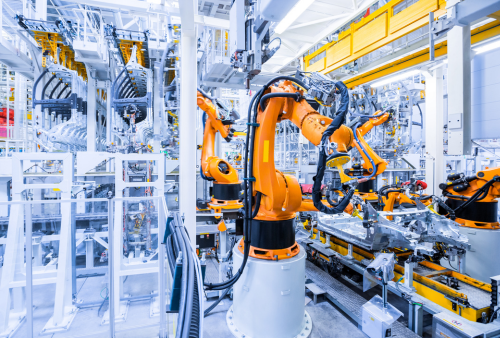
Manufacturing automation is moving beyond isolated equipment upgrades and into more connected production environments. One current industry forecast estimates the industrial control and factory automation market just under $275 billion in 2025 and projects it will reach $435 billion by 2030. That reflects a practical reality on the plant floor. Equipment is running faster, tolerances are tighter, and systems are expected to share more information than ever before. As a result, manufacturers are evaluating automation through more than speed alone.
Integration Is a Core Design Requirement
As automation systems become more connected, integration often determines whether a project improves throughput or creates bottlenecks. Machines, sensors, PLCs, HMIs, robotics, quality systems, MES platforms, and ERP systems increasingly need to exchange accurate data in real time. Industrial Internet of Things (IIoT), Industry 4.0, edge computing, and cloud platforms are part of this shift. That makes communication protocols, data standards, and controls architecture as important as the installed machine or robot. For many facilities, the challenge is not starting fresh. New automation often must work alongside legacy equipment, older controls, and processes that still depend on manual checks. A practical evaluation should ask how data moves across the line, where decisions are made, and whether operators and maintenance teams can see the same information.
Speed and Precision Depend on the Entire Motion System
Higher line speeds can expose weaknesses hidden at slower cycle rates. Motion components, sensing, controls logic, mechanical rigidity, and feedback loops all affect repeatability. A robotic cell, gantry, or indexing system may meet a speed target in theory, but still underperform if vibration, backlash, heat, or poor alignment reduce accuracy over time. This is why mechanical selection should be reviewed alongside controls and software. In linear motion applications, for example, the choice of a rack and pinion gearbox can influence positioning accuracy, load handling, and consistency under demanding duty cycles.
Scalability Should Be Planned Before Capacity Is Needed
Automation projects are often justified around an immediate need, such as labor constraints, quality issues, throughput targets, or safety concerns. However, systems that solve only the current problem may become limiting as product mix, volume, or reporting requirements change. Modern automation systems often need to collect data, adjust in real time, and connect equipment across entire production lines, including older machines that may not have been designed for today’s connected environments. Scalable planning should therefore consider spare I/O, network capacity, cabinet space, software licensing, robot reach, tooling flexibility, and the ability to add stations later. Manufacturers should also consider whether a system can support future analytics, traceability, or remote diagnostics without a full redesign.
Smarter Systems Need Stronger Data Discipline
AI, machine learning, edge computing, and predictive maintenance all depend on clean, useful data. These technologies are designed to support real-time monitoring, predictive maintenance, quality control, and faster decision-making. Still, analytics are only as valuable as the information behind them. Data needs to be complete, time-stamped correctly, consistently labeled, and tied to meaningful production events. Before adding advanced analytics, manufacturers benefit from defining which data matters, who owns it, how it will be checked, and how insights become action.
Reliability, Maintainability, and Cybersecurity Are Linked
As systems become more connected, uptime depends on both physical reliability and digital protection. Components should be selected for duty cycle, environment, serviceability, and parts availability. Maintainability also includes documentation, diagnostics, backups, and technician training. Cybersecurity can no longer be treated as separate from engineering. Connected sensors, controllers, cloud tools, and remote access points can improve visibility, but also expand the areas that must be protected. Network segmentation, access control, patch planning, and recovery procedures should be considered early, so security measures support production rather than interrupt it.
Building Automation Systems for Long-Term Performance
Faster and smarter automation can help manufacturers improve precision, responsiveness, and operational visibility, but performance depends on more than advanced equipment. Strong systems are mechanically sound, digitally connected, scalable, maintainable, and secure. As automation demands increase, manufacturers that plan around integration, data quality, reliability, and flexibility will be better prepared to adapt without sacrificing consistency or uptime.
Author bio: Rebecca Banks is the Marketing Content Strategist at STOBER. Banks has been developing content for STOBER since 2021 and has more than 15 years of marketing experience. She holds a bachelor’s degree from the University of Kentucky and a Master of Science in Digital Marketing and Analytics from St. Edwards University.